Source Diesel Generator AVR for Land Marine and Trailer Use
Explore 30 listings for diesel generator avr components suitable for land, marine, and trailer applications. Buyers can compare models like AS440 and SX460 with varying cooling methods and output types to find suitable units for common, standby, or emergency crew usage.
Key considerations
Products List


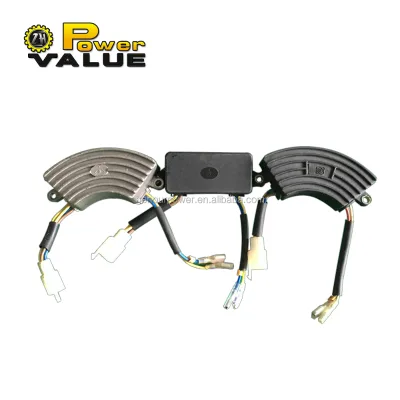


Comprehensive Sourcing Guide
Strategic Sourcing Guide for Diesel Generator AVR Components
Navigating the global market for Automatic Voltage Regulator (AVR) components within the diesel generator sector requires a disciplined approach to technical verification and supplier assessment. Buyers focusing on the core keyword "diesel generator avr" must distinguish between generic component listings and specialized units designed for specific generator architectures. The available market data indicates a diverse range of products, including models such as the AS440, SX440, SX460, and specific variants like the AVR Gavr-15B and Gavr-20A. Understanding the intersection of these model numbers with the broader diesel generator ecosystem is the first step in forming a robust procurement strategy.
Technical Specifications and Model Variability
The technical landscape for diesel generator AVRs is characterized by significant variability in output types, cooling methods, and physical dimensions. A critical observation from current market listings is the divergence in cooling mechanisms. While some units are explicitly designated as "Air Cooled," others in the same category are listed with "Oil Cooling" specifications. This distinction is paramount for procurement teams, as the cooling method directly impacts the thermal management strategy of the generator set and the longevity of the AVR under load.
Furthermore, the output type for these components varies between AC Single Phase and DC configurations. Buyers must verify that the selected AVR matches the excitation system of their specific diesel generator. For instance, the data references a "Brushless" generator type with a power range of 50-500kw, suggesting that the AVR must be compatible with brushless excitation systems. The physical attributes also present a wide spectrum; some units are described with a "Plastic Case" and a weight of 0.36kg per piece, while others are heavier, with a gross weight of 0.7kg. The dimensions are equally inconsistent across listings, ranging from compact sizes like 12.58.55.5CM to larger packages measuring 21X16X12 cm.
The following table summarizes the observed technical specifications to highlight the need for precise matching:
| Attribute | Observed Variations | Procurement Implication |
|---|---|---|
| Cooling Method | Air Cooled, Oil Cooling | Must match generator thermal design; mismatch leads to overheating. |
| Output Type | AC Single Phase, DC | Determines compatibility with generator excitation winding. |
| Generator Type | Diesel Generator, Steam Turbine | Diesel-specific AVRs are required for diesel applications. |
| Physical Weight | 0.36kg/PC, 0.7kg Gross | Affects shipping costs and mounting requirements. |
| Dimensions | 12.58.55.5CM, 21X16X12 cm | Critical for enclosure fitment and space planning. |
| Model Series | AS440, SX440, SX460, Gavr-15B | Each model may have unique voltage regulation curves. |
Compliance, Certification, and Standard Verification
When sourcing AVR components, the verification of standards and certifications is non-negotiable. The market data references specific standards such as "SGS INTERTEK" and general compliance with "avr automatic voltage regulator" standards. However, the presence of a standard component label or a generic standard name does not guarantee that a specific unit meets international safety or performance benchmarks. Buyers must treat these references as indicators of potential compliance rather than absolute proof.
The data also lists "Standard Component" as a product attribute, which suggests that some units are generic replacements. In contrast, other listings reference specific model numbers like "M16FA655A" or "DSR," implying a higher degree of specificity. For diesel generators, which often operate in critical standby or emergency crew scenarios, the AVR must adhere to rigorous voltage regulation tolerances. Buyers should explicitly request test reports or certification documents that verify the unit's performance against recognized industry standards, rather than relying solely on the product title or a generic "SGS" mention.
Additionally, the "prod_standard" field in the data sometimes lists physical dimensions (e.g., "12.58.55.5CM") rather than technical standards. This inconsistency highlights the need for buyers to clarify whether a listed "standard" refers to a manufacturing tolerance, a safety certification, or a packaging specification. In the context of diesel generators, the primary concern is electrical performance and safety, so any standard reference that does not explicitly address electrical safety or EMC (Electromagnetic Compatibility) should be treated with skepticism until verified.
Cost Drivers and Pricing Dynamics
The pricing structure for diesel generator AVRs in the current market exhibits extreme volatility, with observed price ranges spanning from $2.10 to $250,000 USD. This massive disparity is not indicative of a single product category but rather reflects the inclusion of everything from small, single-phase control modules to complete, high-capacity generator systems with integrated AVR technology. A buyer searching for a specific AVR component must navigate this noise by filtering for the specific model and capacity.
The lower end of the price spectrum, likely around $2.10, corresponds to small, lightweight components with plastic casings and minimal packaging, such as the 0.36kg units. Conversely, the upper end of the range suggests large-scale industrial solutions or complete generator sets where the AVR is a subsystem. The "Gross Weight" and "Material" attributes, such as "Plastic" versus potential metal enclosures for industrial units, are significant cost drivers. Heavier, more robust units designed for marine or land use in harsh environments will naturally command higher prices due to material costs and manufacturing complexity.
Buyers must also consider the "MOQ" (Minimum Order Quantity) as a cost factor. The observed MOQ range is 1 to 100 pieces. While an MOQ of 1 piece allows for low-risk sampling, it often carries a higher unit cost. Bulk orders, potentially meeting an MOQ of 100, may offer economies of scale but require a commitment to volume. The "Delivery Time" is another variable; while some suppliers offer delivery within 3-15 days or even 2 days after payment, expedited shipping or custom manufacturing can significantly inflate the total landed cost.
Typical Applications and Usage Scenarios
The versatility of diesel generator AVRs is evident in the diverse "Conditions of Use" and "Usage" categories observed in the market. These components are deployed in "Land Use," "Marine," "Trailer Type," and "Car Type" environments. This indicates that the same core technology is adapted for stationary power plants, mobile emergency units, and marine vessels. The "Usage" classification further breaks down into "Common Units," "Standby Unit," and "Emergency Crew" applications.
For "Standby Unit" applications, reliability is the primary concern. The AVR must maintain stable voltage during the transition from utility power to generator power and handle the initial inrush current of connected loads. In "Emergency Crew" scenarios, the equipment must be portable and rugged, aligning with the "Portable" installation method and "Plastic Case" attributes seen in some listings. The "Marine" condition of use implies a need for corrosion resistance and the ability to operate in high-humidity environments, which may necessitate specific coatings or sealing not present in standard "Land Use" units.
The "Application" field explicitly mentions "Diesel or Gas Generator," confirming that these AVRs are designed for internal combustion engine-driven systems. However, the presence of "Steam Turbine Generator" in the data suggests that some suppliers may list components that are technically compatible with multiple prime mover types. Buyers must ensure that the AVR is specifically tuned for the voltage and frequency characteristics of diesel generators, which typically operate at 50Hz or 60Hz with specific voltage profiles (1/3 Phase).
Supplier Evaluation and Origin Analysis
Evaluating suppliers for diesel generator AVRs requires a focus on origin and logistical capabilities. The data indicates that products originate from "China" and specifically from "Fuzhou." While Fuzhou is a known manufacturing hub, the broad "China" origin label suggests a decentralized supply chain with varying levels of quality control. Buyers should prioritize suppliers who can provide clear documentation of their manufacturing location and quality assurance processes.
The "Delivery Time" and "Lead Time" are critical metrics for supplier evaluation. The observed range of "3-15 Days" and "After Paid 2days" suggests that some suppliers have robust inventory, while others may operate on a make-to-order basis. For critical spare parts, a supplier with a 2-day delivery window is preferable to one with a 15-day lead time. However, buyers must verify if these times are consistent or if they apply only to specific models.
The "prod_packing" attribute varies between "Ctns," "Carton Pallet," and "Carton." This variation affects the logistics of shipping and the protection of the component during transit. A "Carton Pallet" suggests bulk shipping readiness, while individual "Ctns" may require more handling. Buyers should request packing details to ensure that the AVRs, which may contain sensitive electronic components, are protected against moisture and physical shock, especially for marine or outdoor applications.
Quality Control and Long-Term Procurement
Ensuring the quality of diesel generator AVRs involves rigorous testing and long-term relationship management. The "Warranty" period is a key indicator of supplier confidence, with observed terms of "12 Months" and "1 Year." While these terms are standard, buyers should verify what the warranty covers, specifically regarding voltage regulation stability and component failure. The "Language" attribute, noting "Multiple Language" support, is a positive sign for international suppliers, facilitating clearer communication regarding technical specifications and warranty claims.
Long-term procurement considerations include the availability of spare parts and the consistency of the "Standard Component" supply. The data shows multiple model numbers (AS440, SX440, SX460, etc.), indicating a complex product line. Buyers should assess the supplier's ability to provide consistent replacements for older models to avoid obsolescence issues. The "Customization" attribute being "Available" is a significant advantage, allowing buyers to tailor the AVR to specific generator requirements, such as unique voltage settings or communication protocols.
Finally, the "Keyword" "AVR" and the specific "Standard Component" designation suggest that buyers should look for suppliers who specialize in voltage regulation rather than general electrical components. The presence of "Glue: Black,Hard" and "Plastic Case: Yes" in the data points to specific manufacturing processes that may affect the durability of the unit. Buyers should request samples to verify the quality of these materials and the assembly process before committing to large orders. By focusing on these technical and logistical details, procurement teams can mitigate risks and ensure the reliable operation of their diesel generator fleets.
FAQs
What cooling methods are available for diesel generator AVRs?
Diesel generator AVRs are available in both air cooled and oil cooling configurations. Buyers must verify the specific cooling method matches their generator's thermal design to prevent overheating and ensure longevity under load.
Which output types are compatible with diesel generator excitation systems?
Available output types include AC single phase and DC configurations. Procurement teams must select the specific output type that matches the excitation winding of their diesel generator to ensure proper voltage regulation.
Can I find diesel generator AVRs with a plastic case?
Yes, some units feature a plastic case and weigh approximately 0.36kg per piece. These lightweight components are suitable for portable installations and common units where weight and material are critical factors.
What is the typical delivery time for diesel generator AVR components?
Delivery times range from 3 to 15 days or as fast as 2 days after payment. Expedited options are available, but lead times vary by supplier inventory and whether the unit is a standard or customized component.
Which certifications are referenced for diesel generator AVR standards?
Some listings reference SGS INTERTEK standards and general automatic voltage regulator compliance. Buyers should treat these as indicators and request specific test reports to verify electrical safety and performance benchmarks.
How does the MOQ affect diesel generator AVR procurement costs?
Minimum order quantities range from 1 piece to 100 pieces. Lower MOQs allow for sampling but may carry higher unit costs, while bulk orders meeting higher MOQs often provide better economies of scale.
What conditions of use apply to these diesel generator AVRs?
These components are designed for land use, marine, trailer type, and car type environments. The specific application dictates the required ruggedness, with marine units needing corrosion resistance for high-humidity conditions.